Over the past five decades the general approach to our defence policy has been the Defence of Australia doctrine. That approach was aimed at deterring and responding to potential low-level threats from a small or middle power in our immediate region.
I suggest that a more realistic interpretation of Australia’s military (not defence, as it has never in that period actually been used defensively) has been that Australia’s entire economic, military, and diplomatic capacity has been used to bolster the USA’s misadventures overseas. The evidence of this comes in two flavours:
- The Australian Defence Force has sponged away billions of dollars for everything except defence. It has not once been used defensively.
- The ADF has engaged in numerous misadventures overseas in support of the USA, most of them being ill-advised and counter-productive invasions of countries which never attacked Australia, and most have been outside our immediate region.
How on Earth has the Australian government permitted Defence to get away with manufacturing such a supposedly important and policy-driving document which is so obviously detached from reality?
This approach is no longer fit for purpose.
It was never fit for purpose. It was never related to reality.
As a result, this Review has outlined a new strategic conceptual approach to Australia’s defence planning and strategy – National Defence.
Minor gripe again: “review” in this usage begins with a lower case “r”.
National Defence is focused on the defence of Australia in the face of potential threats in our region.
But they just said “That approach was aimed at deterring and responding to potential low-level threats from a small or middle power in our immediate region.” So the difference is the omission of the terms “low-level” and “a small or middle power”? Well that’s a mind-bogglingly gigantic difference around which to base a half-trillion dollars of spending!
Our nation and its leaders must take a much more whole-of-government and whole-of-nation approach to security.
Why? Not that I’m disagreeing at this stage. But what is the logical connection between “the defence of Australia in the face of potential threats in our region” and any necessity for “whole-of-government” and “whole-of-nation” approaches to security? What exactly is a “whole-of-government” approach to security in relation to military spending? What exactly is a “whole-of-nation” approach to security in relation to military spending? These things are not explained or justified in this policy document. You can’t reasonably say “We need more money because whole-of-government”. It just doesn’t contain any logic.
This approach requires much more active Australian statecraft that works to support the maintenance of a regional balance of power in the Indo-Pacific.
First, there is no capacity for statecraft within Australia. We just don’t have that ability. It has been decades since any Australian politicians had any capabilities involving perception, negotiation, and thinking beyond their tiny, parochial, backasswards ideas.
Second, the notion of “balance of power” is not within Australia’s bailiwick. Australia has no influence whatsoever over who does or does not have any degree of power. Nobody cares what Australia’s politicians want or think. The idea that Australia can influence any power structures is like an ant believing it can control USA presidential elections.
This requires deepening diplomatic engagement and stronger defence capabilities to help deter coercion and lower the risk of conflict.
Why does it require deepening diplomatic engagement? Why does it require more military spending? It very well may require it. But once again the authors have made the leap from A to B with absolutely no logic connecting them.
I suggest that less government interference, and more free private sector interaction between Australia and everyone else, is by far the best road to peaceful coexistence. Countries usually don’t go to war with their business partners.
Our Alliance with the United States will remain central to Australia’s security and strategy.
- Why? No logical reason for the assertion has been provided.
- It will remain in place only so long as the voting public wish it. The moment the voting public get tired of wasting their income, through taxation, on American wars, and the moment they tired of seeing their sons and daughters mutilated and killed for such purposes, that alliance will end. And there is absolutely nothing Defence or the government can do about it.
For the aforementioned two reasons, it would be more appropriate to state “Our alliance with the United States will exist so long as the voting public permit it”.
Also, again, “alliance” begins with a lower case “a”.
The United States will become even more important in the coming decades.
Why? The USA’s influence has been declining drastically for years. That’s really the main reason for this policy document: China is getting more powerful, the USA is getting less powerful, and the USA wants to do anything it can to maintain the dominance it enjoyed since WW2. It’s quite clear to the entire world that the USA is a declining power, with declining influence.
But, you know, just another baseless assertion in a government policy document, which will be used as the excuse to tax shit-tons of money from tax-payers, and hand it over to big American military hardware manufacturers.
Defence should pursue greater advanced scientific, technological and industrial cooperation in the Alliance…
Alliance in that usage begins with a lower case “a”.
Anyway, we’ve been working in cahoots with the USA for decades when it comes to science, technology, and industry. The result: Australia has lost almost all its manufacturing capability, our universities are teaching magical infinite gender theory instead of science, and individual and household debt are at catastrophic levels.
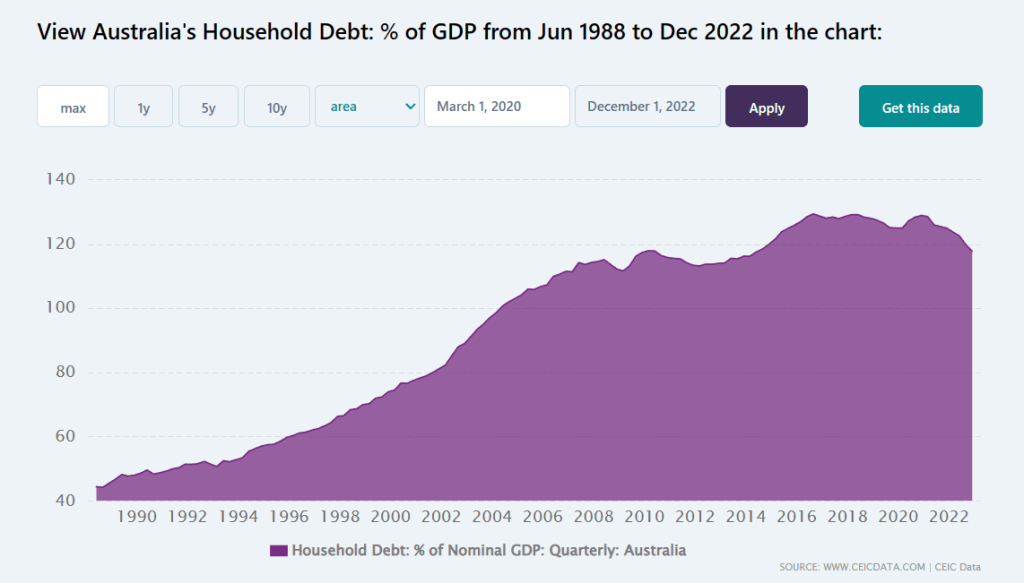
Tell me again how government-managed science, technology, and industry are so fucking amazing.
Here’s a counter-proposal: Government should get the hell out of the way, and leave technical and industrial development to the ones who actually know how to do it: the private sector.
… as well as increased United States rotational force posture in Australia…
How does that benefit the people of Australia?
… including with submarines.
Oh, by the way, buy our products!
Investing in our Indo-Pacific regional partnerships remains essential.
Free trade by the private sector is what you’re getting at there, and government involvement to any degree is antithetical to a healthy business environment.
Australia’s focus must be to deepen its engagement and collaboration with partners across Southeast Asia and the Pacific.
What they’re referring to here is the Australian government’s focus. Not Australia’s focus. The Australian government’s focus should be to minimise the extent of its interference in the lives and businesses of Australian citizens. That will naturally, in turn, allow greater trade between Australia (meaning the Australian people) and other nations.
The Defence Cooperation Program should continue to grow, particularly in the Indian Ocean region.
In case you’re wondering, the Defence Cooperation Program is:
- … it was difficult to identify benefits …
- … the absence of detailed and well defined program objectives …
- …long-standing deficiency has resulted in a lack of comprehensive information that would help management to adequately assess the cost-effectiveness of the resources allocated to these activities …
- … difficulties in establishing clear criteria to assess the relative merits of various proposals …
- … the cost of administering the DC program is a significant proportion of overall DC resources …
In other words, YOU are taxed, and Defence absorbs most of the money for its own administrative overheads, and then hands over some of it to various definitely-not-corrupt politicians and bureaucrats throughout Southeast Asia, with no actual plan, key performance indicators, reviews, or anything else along the lines of accountability and responsibility. Let’s be frank: it’s definitely-not-bribe money. They pay people to be friendly to Australia.
Australia also needs to continue to expand its relationships and practical cooperation with key powers, including Japan and India, and invest in regional architecture.
Well, yes, that would be nice. But Australia can afford to invest $X, and every major power in the region can afford to invest $1000X. Australia is a small fish trying to influence a bunch of much bigger fish. We just don’t have the capacity.
As for “Japan and India”, what they’re talking about is “countries near China who might be able to contain China”. There are several major problems with this strategic objective:
- Japan doesn’t like the USA and its friends. There is an increasing anti-USA sentiment throughout Japan, due to the USA planting military bases there since WW2, and US military personnel frequently raping Japanese women. (Similar to the AFRICOM rapes.)
- India has a stronger relationship with China than it does with Australia or the USA. While the total trade volume between India and USA remains higher than the total trade volume between India and China, the former is decreasing, and the latter is increasing. Additionally, India retains military alliances with China, and frequently conducts joint military exercises with China.
- The people (and politicians) of India and Japan know very well that the USA and its few remaining friends want to use them as expendable catspaws against China. And they don’t want to be used. They know the USA’s goals, and they don’t give a damn about the USA’s goals.
For all these reasons, a more beneficial option would be for the government to minimise its interference in the lives and businesses of citizens, get the heck out of the way, and allow naturally growing free trade to develop between Australia (that is, the actual people of Australia, rather than the government) and everyone else in the world.
 Defence Strategic Review
Leave a comment